


.svg)

Multiple Sclerosis and Exercise: What Actually Works for Managing Symptoms
Discover how exercise helps manage multiple sclerosis symptoms. Evidence-based guide to training with MS, including best exercises and safety considerations.
You were diagnosed with multiple sclerosis, and your neurologist told you to exercise. Maybe they mentioned it helps with fatigue, balance, and mobility. Then you tried a workout and felt worse for days. Or you found generic exercise advice online that doesn't account for heat sensitivity, fatigue that's completely different from normal tiredness, or symptoms that change day to day.
Here's what most general fitness advice misses about multiple sclerosis and exercise: your body doesn't respond to training the same way it did before diagnosis. Heat makes symptoms worse. Fatigue isn't solved by pushing through. Balance issues create a fall risk during exercises that are perfectly safe for others. And your capacity changes unpredictably, making rigid training plans problematic.
Effective exercise for multiple sclerosis requires understanding these unique considerations and building programming that works with your condition, not against it. This isn't about lowering expectations – it's about training intelligently based on how MS actually affects your body.
Why Exercise Matters for Multiple Sclerosis
The relationship between multiple sclerosis and exercise has been extensively researched, and the evidence is clear: appropriate exercise improves symptoms, slows progression of disability, and enhances quality of life.
Exercise reduces MS-related fatigue, which sounds counterintuitive but is consistently demonstrated in research. The fatigue associated with multiple sclerosis differs from normal tiredness – it's more severe, comes on more easily, and doesn't always improve with rest. Appropriate exercise actually reduces this fatigue over time by improving cardiovascular efficiency, muscular endurance, and energy system function.
Balance and coordination improve with targeted exercise. MS affects the nervous system in ways that compromise proprioception and motor control. Exercise that challenges balance in controlled, progressive ways rebuilds these capacities and reduces fall risk – one of the most significant injury concerns for people with MS.
Muscle strength and endurance decline faster in multiple sclerosis due to both the disease process and reduced activity levels. Resistance training maintains or improves strength, which directly affects your ability to perform daily activities and maintain independence.
Mental health benefits are significant. Depression and anxiety are common with MS. Exercise produces documented improvements in mood, cognitive function, and overall mental wellbeing.
Common Mistakes That Make MS Symptoms Worse
Most people with multiple sclerosis try to exercise the same way they did before diagnosis, or follow generic fitness advice that doesn't account for MS-specific considerations.
Ignoring Heat Sensitivity: Many people with MS experience symptom worsening with increased body temperature – called Uhthoff's phenomenon. You work out in a warm gym, your core temperature rises, and suddenly your vision blurs, fatigue intensifies, or weakness increases. These symptoms often resolve with cooling, but repeatedly triggering them through inappropriate exercise environment makes people quit training entirely.
Not Modifying for Daily Variability: MS symptoms fluctuate day to day and sometimes hour to hour. Following a rigid training plan means you're either under-training on good days or over-training on bad days. Both scenarios are problematic.
Pushing Through MS Fatigue: Normal training fatigue improves with rest and feels like tired muscles. MS fatigue is different – it's more severe, affects your whole body, and doesn't respond to rest the same way. Pushing through MS fatigue doesn't build toughness. It worsens symptoms and can trigger prolonged symptom exacerbation.
Not Addressing Balance Issues Safely: Balance and coordination problems are common with MS. Attempting exercises that were safe before diagnosis might now create significant fall risk. This doesn't mean avoiding balance work – it means modifying exercises appropriately.
Best Exercise Approaches for Multiple Sclerosis
The relationship between multiple sclerosis and exercise works best when programming accounts for MS-specific considerations while still providing progressive challenge.
Cardiovascular Exercise
Cardiovascular work improves fatigue, endurance, and overall function in multiple sclerosis, but requires careful management of intensity and heat.
Walking: The most accessible cardiovascular exercise for most people with MS. Start with short durations – even 5-10 minutes counts. Gradually increase duration before increasing intensity. Early morning or evening walks avoid peak temperatures, and indoor walking offers climate control.
Cycling: Stationary cycling provides cardiovascular benefit with less balance demand than walking. The seated position is safer for people with balance issues, and intensity is easily adjustable. Many people with MS tolerate cycling well because reduced impact and controlled environment minimize symptom triggers.
Aquatic Exercise: Water provides a cooling effect that helps manage heat sensitivity while offering resistance for strength work. Pool temperature matters – cooler pools (around 27-29°C) are better for MS than warm therapy pools. Swimming, water walking, and aquatic classes provide excellent cardiovascular and strength benefits.
Resistance Training
Strength training maintains muscle mass and function that MS progressively affects. Research shows people with multiple sclerosis can safely perform resistance training and achieve strength gains when programming is appropriate.
Machine-Based Training: Provides stability and safety for people with balance concerns while allowing progressive overload. Leg press, chest press, lat pulldown, and similar machines offer effective resistance with reduced fall risk compared to free weights.
Bodyweight Exercises with Modification: Sit-to-stand variations, wall push-ups, modified planks build functional strength relevant to daily activities. These can be performed at home and easily modified based on daily capacity.
Resistance Bands: Portable, affordable, and easily adjusted for different strength levels. Particularly useful for maintaining training routine when traveling or managing symptoms at home.
Progressive Overload with Flexibility: Strength training for MS should include progressive overload – gradually increasing challenge – but with built-in flexibility. Some days you lift slightly heavier. Some days you maintain current loads. Some days you reduce loads based on symptoms.
Balance and Coordination Training
Balance work is crucial for multiple sclerosis because the condition directly affects the nervous system's ability to coordinate movement and maintain stability.
Supported Balance Exercises: Practice standing balance while holding a countertop or chair. Progress to lighter touch, then fingertip support, then no support as balance improves. This controlled progression builds balance capacity without dangerous fall risk.
Tandem Walking: Walk heel-to-toe along a straight line while near a wall for support if needed. This challenges balance in a functional movement pattern and improves stability during normal walking.
Single-Leg Stance Progression: Stand on one leg while supported, progressing to unsupported as balance improves. This can be made more challenging by closing eyes or performing arm movements while balancing.
Tai Chi or Yoga: Both practices emphasize controlled movement, balance, and body awareness. Research specifically shows benefits for balance and fall prevention in MS populations.
Managing Exercise Environment and Recovery
The relationship between multiple sclerosis and exercise depends heavily on environmental management and appropriate recovery strategies.
Temperature Control: Exercise in air-conditioned environments when possible. Use cooling vests or neck wraps if heat sensitivity is significant. Schedule outdoor activity during cooler parts of the day. If heat-related symptom worsening occurs, stop exercise and cool down.
Hydration: Staying well-hydrated helps manage fatigue and supports thermoregulation. Drink water before, during, and after exercise.
Fatigue Management: Schedule exercise when you typically have more energy – often earlier in the day. Keep sessions shorter if needed. Twenty minutes of exercise you can sustain is better than 60 minutes that worsens symptoms for days.
Rest Between Sessions: Recovery might take longer with MS. Allow adequate rest between training sessions. If symptoms are significantly worse the day after exercise, reduce intensity or duration next session.
Symptom Monitoring: Some muscle fatigue is normal. Significant symptom exacerbation – vision changes, severe fatigue, coordination problems – indicates you need to modify your approach.
When Professional Guidance Matters
While general exercise principles for multiple sclerosis provide direction, individual variation in symptoms, progression, and capacity means that professional guidance often produces better outcomes.
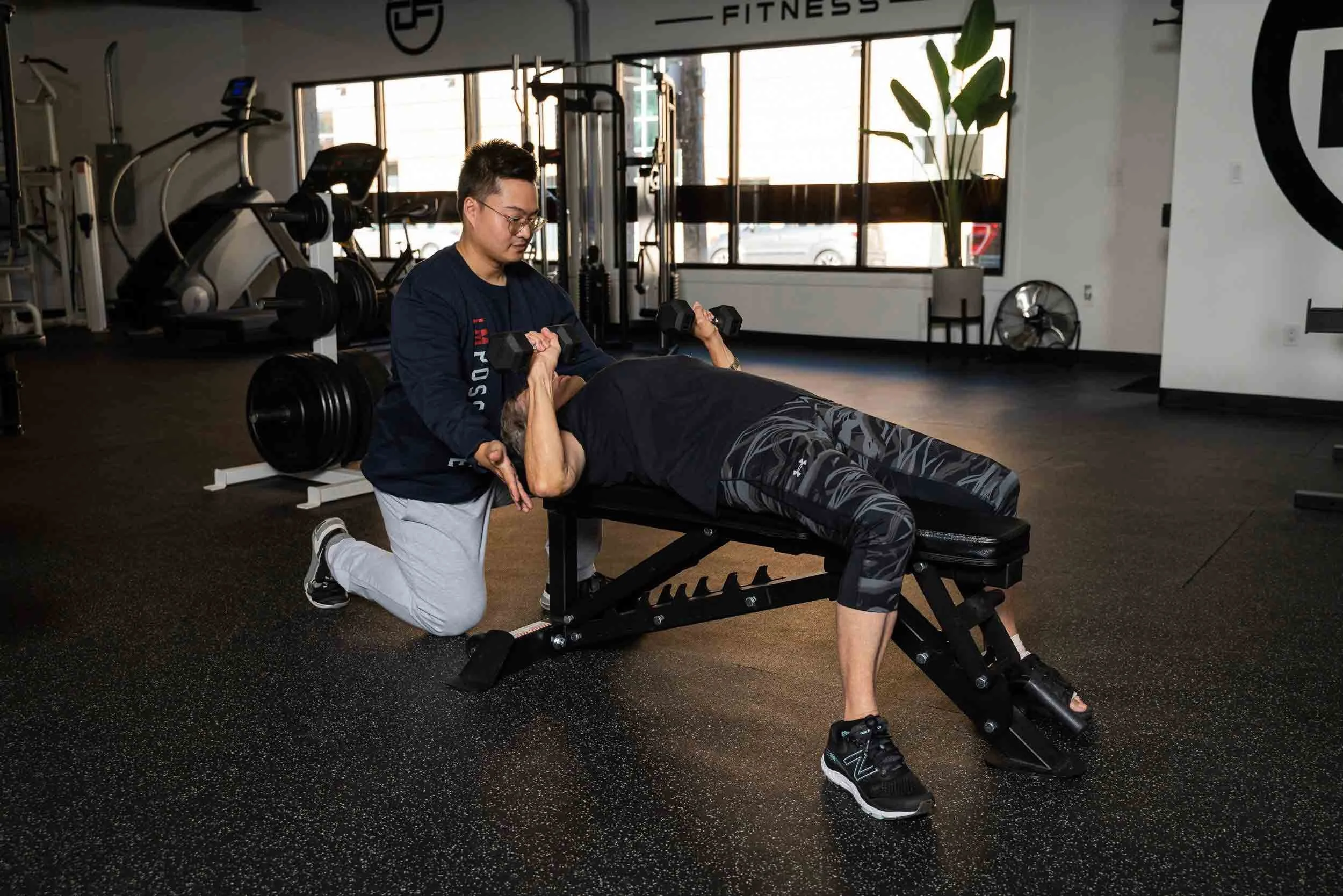
A trainer or physical therapist experienced with MS can assess your specific limitations, design programming around your symptoms, and modify exercises based on your daily capacity. They can identify movement compensations you're unaware of and provide alternatives when standard exercises aren't appropriate.
They also provide accountability and adjustment that's difficult to manage alone. MS symptoms fluctuate, and having someone who understands when to push slightly harder versus when to pull back significantly improves long-term consistency.
Ready to Start Training with MS?
Understanding the relationship between multiple sclerosis and exercise is important. Actually implementing appropriate training that accounts for your specific symptoms, capacity, and limitations requires systematic programming and often professional guidance.
At One More Rep in London, Ontario, we have extensive experience working with clients managing MS and other neurological conditions. Programming is built around your current capacity with built-in flexibility for symptom variability. Exercise selection accounts for balance concerns, heat sensitivity, and fatigue patterns unique to MS.
Your free consultation includes movement assessment, discussion of your specific symptoms and limitations, and honest evaluation of what training approach makes sense for your situation.
Apply for Coaching
This form helps determine whether our coaching fits your goals, history and availability.



Take the First Step
As the owner and head coach of One More Rep in London, Ontario, with a decade of experience, I've worked with hundreds of clients with diverse objectives and capacities. The common factor isn't age, fitness level, or training history – it's willingness to follow programs consistently rather than seeking entertaining workouts.
.svg)
Apply for Coaching
This form helps determine whether our coaching fits your goals, history and availability.



Personal Training | Fascial Stretch Therapy | Fitness Test Prep | Voted Best Trainer 2024-2026
